India has one of the richest and oldest traditions of rock art in the world, with petroglyphs found across regions from the Himalayas to the south, spanning Paleolithic to historic periods.
Petroglyphs are images or symbols created by carving, incising, picking, or abrading the surface of a rock. Unlike pictographs (which are painted), petroglyphs involve physically removing or altering the rock to create designs that can last thousands of years.
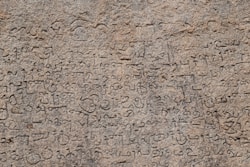
Key Characteristics
- Made on natural rock surfaces like boulders, cliffs, or flat plateaus (often called "saddas" in Konkan).
- Created using stone tools, without metal in prehistoric times.
- Motifs commonly include animals, human figures, footprints, geometric patterns, mazes, and abstract symbols.
Notable Sites:
- Bhimbetka and surrounding areas (Madhya Pradesh): Primarily famous for rock paintings, but also includes engravings; part of a UNESCO World Heritage site showing continuous human occupation.
- Konkan Petroglyphs (Maharashtra): Among the most significant recent discoveries. In Ratnagiri and Sindhudurg districts, over 1,500 petroglyphs have been documented at dozens of sites. The first major site, Nivli (Nivli Fata), was uncovered in 1990 during road work. They feature large animals (elephants, rhinos, tigers, sharks), humans, and labyrinthine patterns, estimated to be 10,000–12,000+ years old (Mesolithic era). Many are on open laterite plateaus and provide insights into ancient hunter-gatherer life, environment, and possible ritual or mapping purposes. Several sites are now protected monuments and on UNESCO's tentative World Heritage list.
- Ladakh and Himalayan regions: Petroglyphs depicting animals, hunting scenes, and ancient scripts.
- Karnataka, Andhra Pradesh, and Odisha: Various prehistoric carvings showing local fauna and human activities.
These Indian petroglyphs are invaluable for understanding prehistory — they reveal early human-animal relationships, artistic skills, and cultural continuity long before the Indus Valley Civilization or Vedic period. Many sites face threats from development, erosion, and neglect, making conservation efforts (by ASI, state archaeology departments, and local groups) crucial. They challenge older timelines and highlight India's deep ancient heritage.