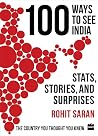
The book 100 Ways to See India: Stats, Stories, and Surprises by Rohit Saran contains some amazing facts and charts about India crunched from data sourced through public sources.
A companion website provides all the data sources too. The book is an excellent resource for anyone curious about data visualization and fascinating facts about India.
Here is a list of facts from the book that amazed me & led me to dig further -
People in Bengaluru district speak over 107 languages—the highest in the country.
The Indian Census groups 56 distinct regional mother tongues and dialects under the broader statistical umbrella of "Hindi". Major regional tongues like Bhojpuri, Rajasthani, Chhattisgarhi, and Magahi are categorized under Hindi in official reporting, which inflates the total number of native Hindi speakers reported nationally (roughly 44% of the population). After Hindi, Odia has the number of mother tongues—9—among the 22 scheduled languages
While the total geographic area of India cannot physically fit inside Kerala's borders, the entire population of India could theoretically fit within Kerala if we all lived as densely as the people in northeast Delhi (or the state's highest urban population densities were applied uniformly across its territory). 14% land in the state could still remain unoccupied.
Dr. Sarvepalli Radhakrishnan holds the record as the Indian with the most Nobel Prize nominations, totaling 27 nominations (16 for Literature and 11 for Peace) between 1933 and 1966. By comparison, Mahatma Gandhi was nominated 5 times (or on 12 distinct occasions across different years, between 1937 and 1948). Despite few awards, India is one of only countries to have Nobel wins in categories—a rare distinction.